Torzon Market Review 2026
Torzon Market is a Tor-only marketplace that has run since 2022, built around vendor storefronts, wallet deposits, and escrow-held payments in Bitcoin or Monero. This review covers how orders actually work, what its track record looks like next to markets that didn't survive, and the risks worth weighing before you connect. We don't operate Torzon Market and aren't affiliated with it.
Current addresses are cross-checked on the links page; connecting through Tor is covered on the access page.

Torzon Market at a Glance
- Format: Tor-only marketplace with individual vendor storefronts, running since 2022
- Payment: Bitcoin or Monero, deposited to a wallet balance before checkout
- Escrow: Funds are held until the buyer finalizes the order or a dispute is resolved
- Track record: Still operating while a number of markets from the same period exit-scammed — see the history and timeline
- Main risks: Phishing clone sites, vendor-level scams, and the exit-scam risk any custodial market carries
- This page: An independent review, not published or commissioned by Torzon's operators
How an Order Works
1. Deposit BTC or XMR
Buyers fund a market-held wallet balance in Bitcoin or Monero before they can check out. Monero avoids leaving the deposit amount visible on a public block explorer; the trade-off and fee mechanics are covered on payments and fees.
2. Browse a Vendor's Storefront
Listings sit under individual vendor shops rather than a single catalog. A vendor's feedback history and account age matter more than the listing photos — see how to read vendor reviews before ordering.
3. Funds Move Into Escrow
Checkout pulls the payment out of the wallet balance and into escrow — the vendor is not paid yet. The full lifecycle, including disputes and early-finalize mistakes, is broken down on escrow and disputes.
4. Order Chat Is PGP-Encrypted
Buyer-vendor messages for an order run through PGP by default, which matters for shipping details or custom requests. General PGP setup for account use is on the security page.
5. Finalize or Dispute
Once the order arrives, the buyer finalizes to release escrow to the vendor. If something's wrong, a dispute goes to staff arbitration instead. Neither step is instant, and early finalizing before confirming delivery is the most common self-inflicted loss.
Reaching the Market
None of the above is reachable outside Tor Browser. Current addresses are cross-checked on the links page; the access page covers Tor Browser setup and first login.
What is Torzon Market?
Torzon Market is a Tor-only marketplace that has operated since 2022, organized around individual vendor storefronts rather than a single unified catalog. Buyers fund a wallet balance in Bitcoin or Monero, and payment sits in escrow until an order is finalized. This page describes what's publicly visible on the platform; we don't operate it and have no role in how it's run.
Track Record Since 2022
Torzon launched during a period when several established markets were exit-scamming their users. Outlasting that period is a data point, not a guarantee — a full timeline of what's publicly documented is on the market's history page.
Vendor-Run Storefronts
Listings live under individual vendor shops with their own feedback history and inventory. Search and filters work reasonably well; the usual bottleneck is Tor's connection speed rather than the storefront layout. More on the tools and fee structure.
What Sits Behind Checkout
PGP-encrypted order messages, optional 2FA on the account, and staff-mediated disputes when an order doesn't arrive. None of it replaces reading a vendor's recent feedback before paying — see how to evaluate vendors.
Torzon Platform Preview
What the interface looks like once you're in — categories, wallet, signup, and login ()
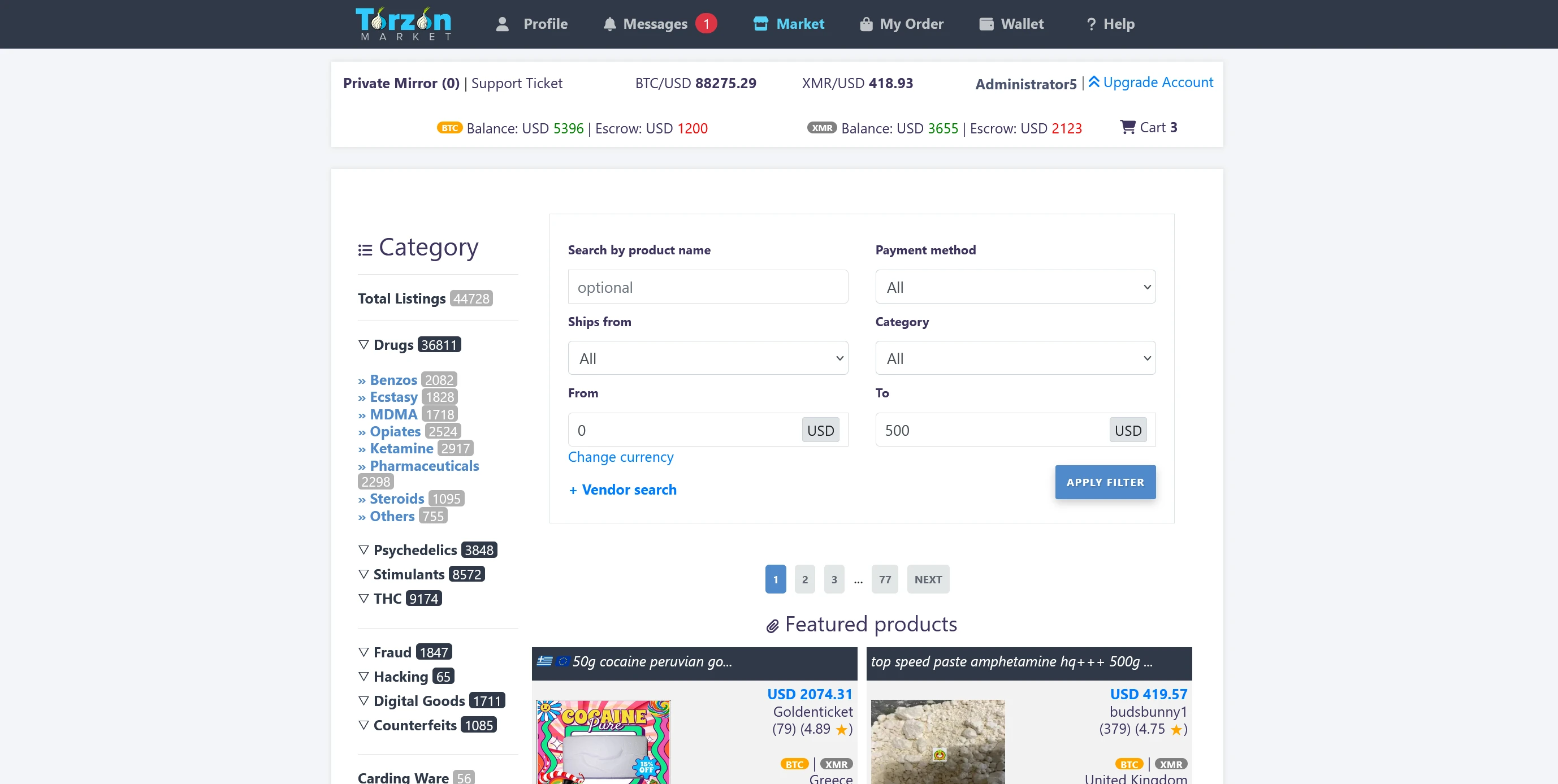
Marketplace Dashboard
Category tiles and search sit at the top; the wallet balance shown in the corner is what escrow draws from at checkout. This is where most sessions start.
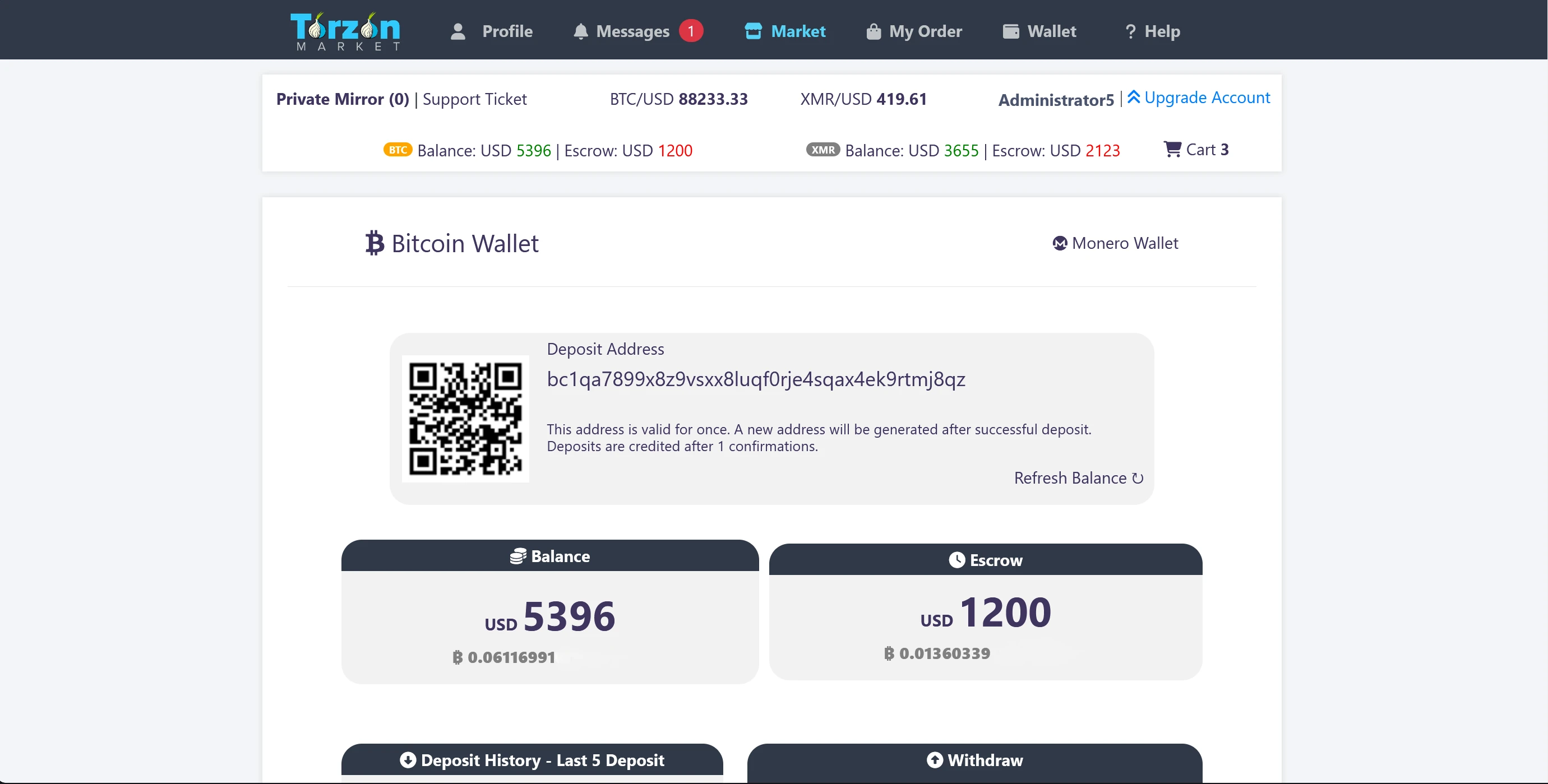
Crypto Deposit
The deposit address shown here is generated per-session — send BTC or XMR to it, and the balance updates after network confirmations, not instantly.
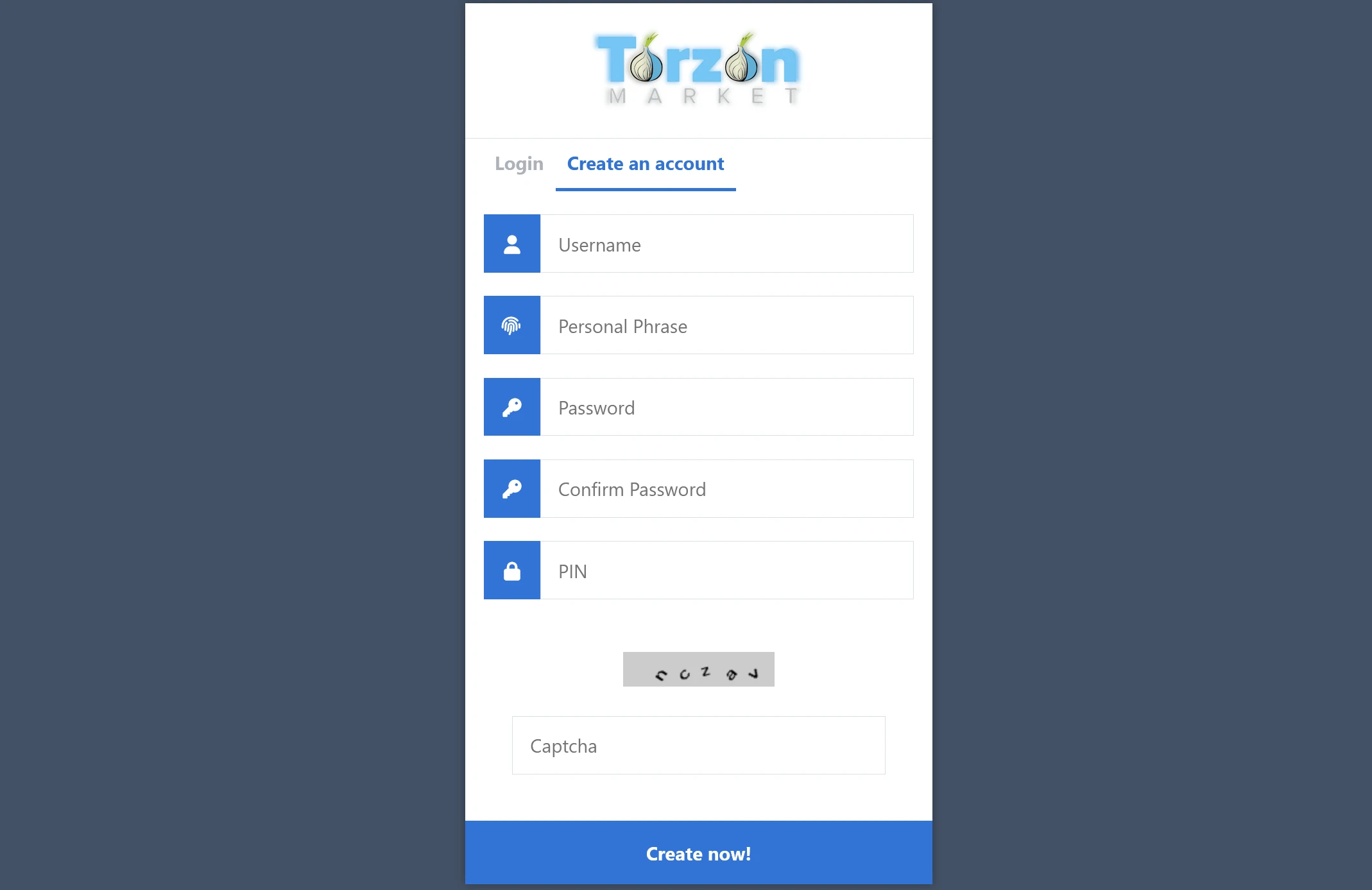
Registration
The signup form asks only for a username, password, and an optional PGP key — no email or phone number, which is standard for Tor-only markets.
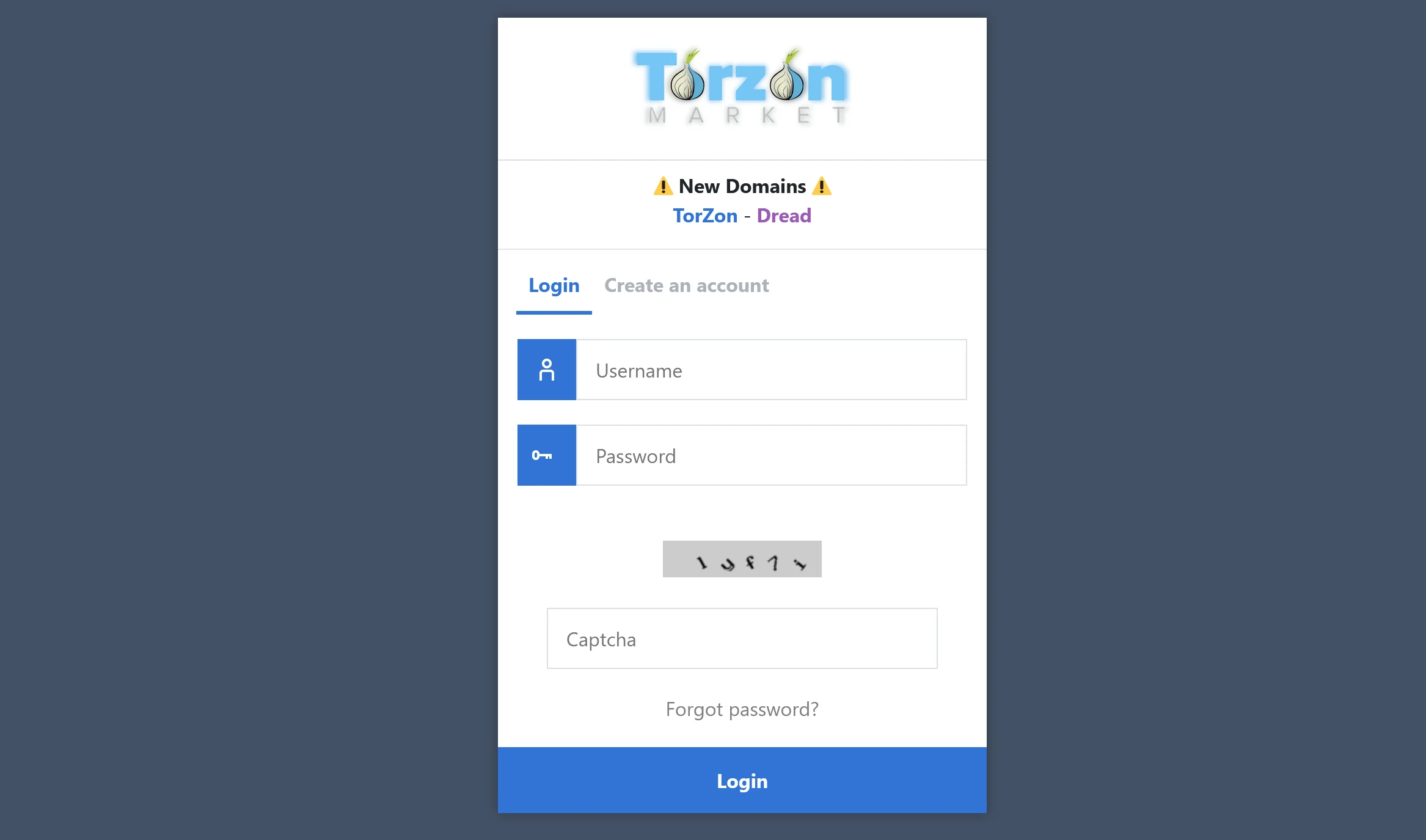
Login
Returning sessions log in with the username, password, and 2FA code set up at registration — no email-based recovery if any of it is lost.
Known Risks
Phishing Clone Sites
Fake domains and lookalike .onion addresses impersonate Torzon to steal deposits and login credentials. This is the risk most easily avoided — see how to spot a fake Torzon link.
Vendor-Level Scams
Individual sellers, not the platform, are the source of most buyer complaints — unshipped orders, misrepresented products, or accounts that stop responding after payment. Reading vendor feedback correctly catches most of this before it happens.
Exit-Scam Risk
Any market holding user balances in escrow carries the structural risk that operators eventually keep the funds instead of returning them. Torzon hasn't done this as of this review, but the pattern is documented on how exit scams unfold and worth reading before leaving a balance on deposit.
Strengths and Weaknesses
What holds up
Escrow on every order, PGP-encrypted order chat, vendor-run storefronts with visible feedback history, and a multi-year operating history compared to markets that folded earlier.
What to weigh
Tor-only access means real connection friction; account recovery is limited if you lose credentials; vendor quality varies store to store; and, like any custodial market, user funds sit at risk until finalized.
Guides and Deep Dives
Torzon Market History and Timeline
A dated record of what's publicly documented about the platform since 2022.
How Escrow and Disputes Work
The full order lifecycle from deposit to finalize, and the mistakes that void escrow protection.
Reading Vendor Feedback and Ratings
What genuine feedback patterns look like versus padded or purchased reviews.
How to Spot a Fake Torzon Link
The clone domains and lookalike addresses that target Torzon users, and how to tell them apart.
Verifying an Onion Address with PGP
A step-by-step walkthrough of checking a PGP signature in GPG or Kleopatra before you trust an address.
How to Buy Monero (XMR) Anonymously
Non-KYC ways to acquire Monero, and the funding mistakes that link coins back to you.
Darknet Market Exit Scams Explained
Documented cases from Sheep to Empire Market, and the warning signs worth acting on.
Verdict
Torzon Market's escrow, vendor structure, and operating history put it in line with the more established Tor-only markets rather than the short-lived ones. That track record reduces one risk without eliminating the others: phishing clones and vendor-level scams remain the more common ways buyers actually lose money, and no custodial market is immune to an eventual exit scam. Whether to use it is a judgment call that depends on the category, the specific vendor, and how much you're willing to leave on deposit at once — this review doesn't make that call for you.
Sources and Updates
- ✅ Current addresses are cross-checked on the links page
- 📅 Last updated:
- 👤 Written by Mara Kestrel
- 🔒 Security documentation · History and sources · Disclaimer